
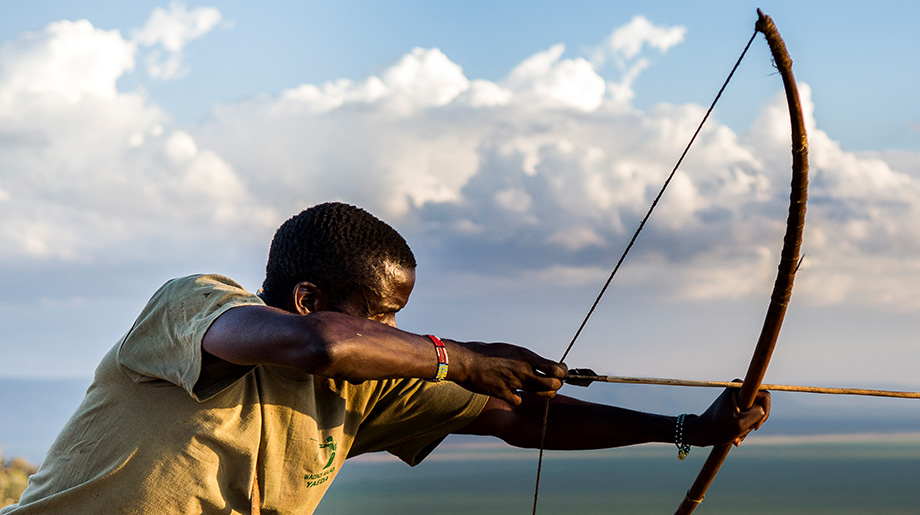
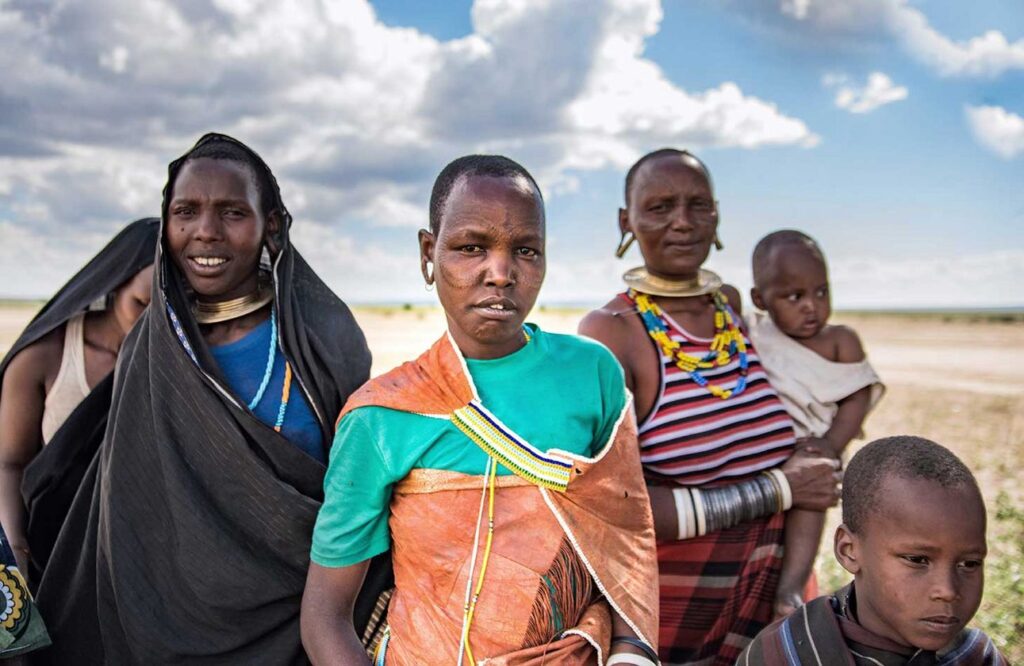
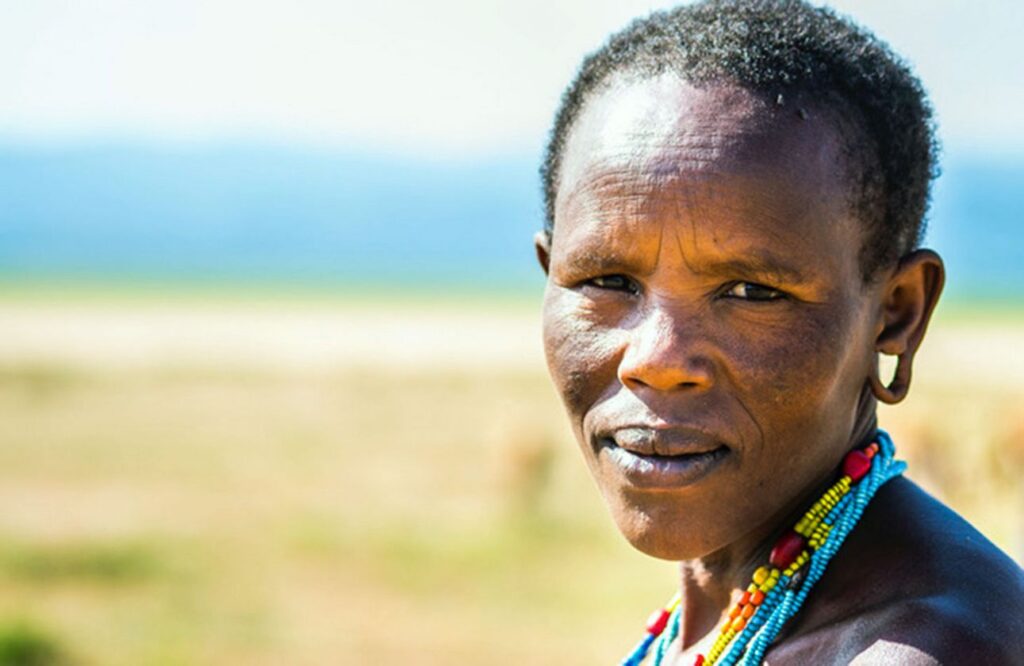
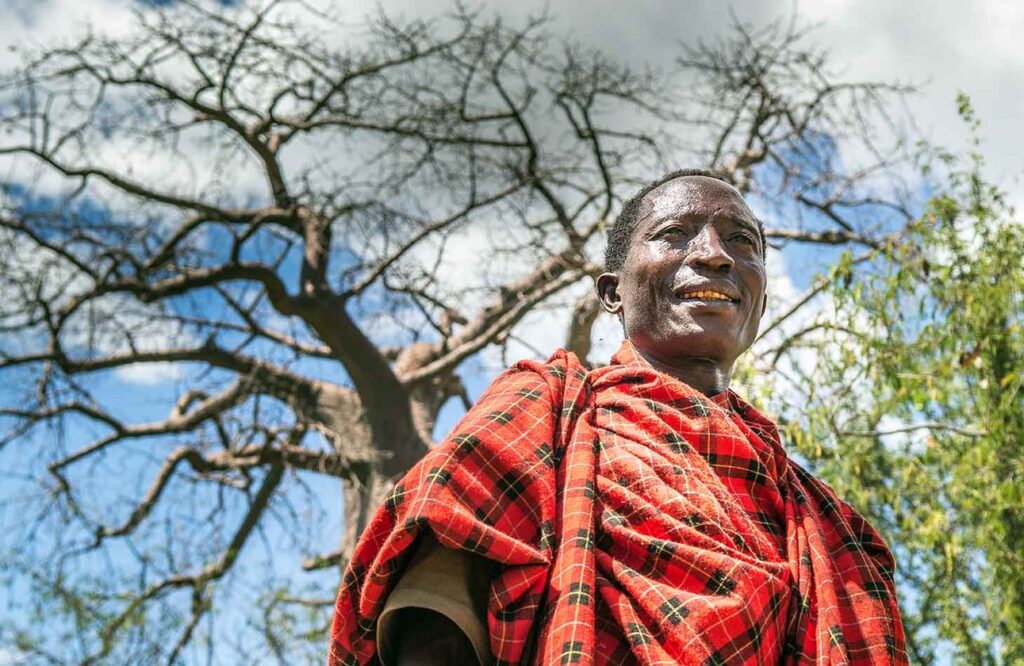
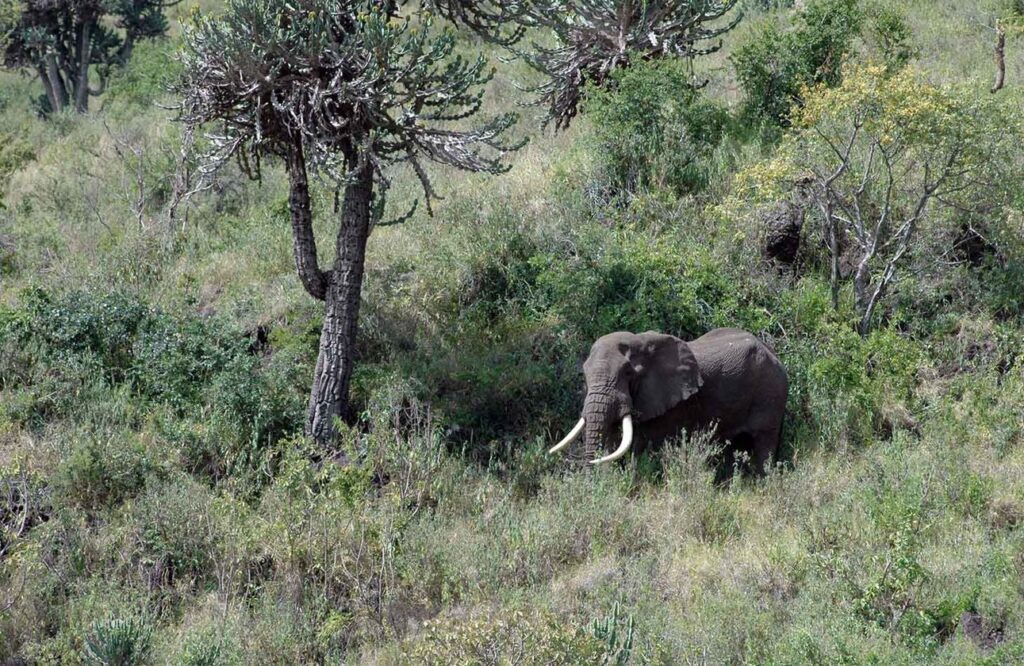
The Acacia-Commiphora woodland in Northern Tanzania is a particularly valuable region from a cultural, socio-economic and ecological viewpoint. The region is home to the Hadza and pastoralist Datooga communities, who comprise their core land for hunting and gathering, medicinal plant collection and important cultural and religious sites. Both communities live at the extreme end of the poverty scale within Tanzania and an income of significantly less than one USD per day. Their way of life only minimally impacts the environment as they continue their historical practices of sustainable natural resource use.
Meaningful long-term global conservation outcomes rely heavily on the willingness and ability of indigenous people to manage these precious resources.
Jo Anderson, Director of myclimate’s project partner Carbon Tanzania
The area is also the habitat of hundreds of bird species and several rare and threatened large mammal species such as the african elephant, Giraffe, wild dog and african lion. Unfortunately, deforestation threatens this unique ecosystem.
The primary driver of deforestation is shifting agriculture. Agriculturalists, especially from neighbouring villages, convert the woodland to cultivate maize, sunflower and foodbeans. The soil is quickly exhausted, yields decrease and the farmers move on to other areas of unconverted woodland. The secondary driver of deforestation is overgrazing by cattle and goats.
Concrete interventions of the project include reinforcing the implementation of the approved village land use plan through the employment of patrol teams monitoring any illegal land encroachment and animal poaching, wildlife monitoring using smart technology, governance, management and financial trainings.
Further project activities include employing and training community guards to protect indigenous and endangered species from poachers, distributing educational material for schools and community meetings and trainings on legal rights.
Being able to collaborate with my community at a grassroots level is deeply rewarding. I am learning more about my community’s journey and I feel empowered to help us all move forward and improve our situation.
Regina Safari was recruited in 2021 to strengthen her community’s voice and to ensure that any development that happens is in-line with Hadza culture and identity.
As communities whose livelihoods depends on the land, the Hadza and the Datooga will benefit from the improved habitat resulting from project activities. Preventing deforestation, thereby preserving the natural habitat will result in a sustained supply of food, grazing and other essential items. Additionally, project activities related to enforcing the land use plan will serve the purpose of protecting the watershed within the project area for the benefit of the people and wildlife.
The project participants will thus benefit from increased and stable income thanks to payments for ecosystem services (PES). The carbon revenues support anti-poaching, monitoring, education and medical provisions to all members of the villages.
Without the ability to generate revenue through the sale of Plan Vivo Certificates, the communities would be unable to secure and protect the forested project area, neither legally nor practically at the community level. This in turn would likely lead to the end of these ancient societies and with it to a loss of a deep reservoir of indigenous knowledge pertaining to natural resource use.
Justcote Ltd.
Company number: 13881985
Address: Devonshire House, Ettingshall Rd, Wolverhampton WV2 2JT
Telephone: +44 333 050 3479


