
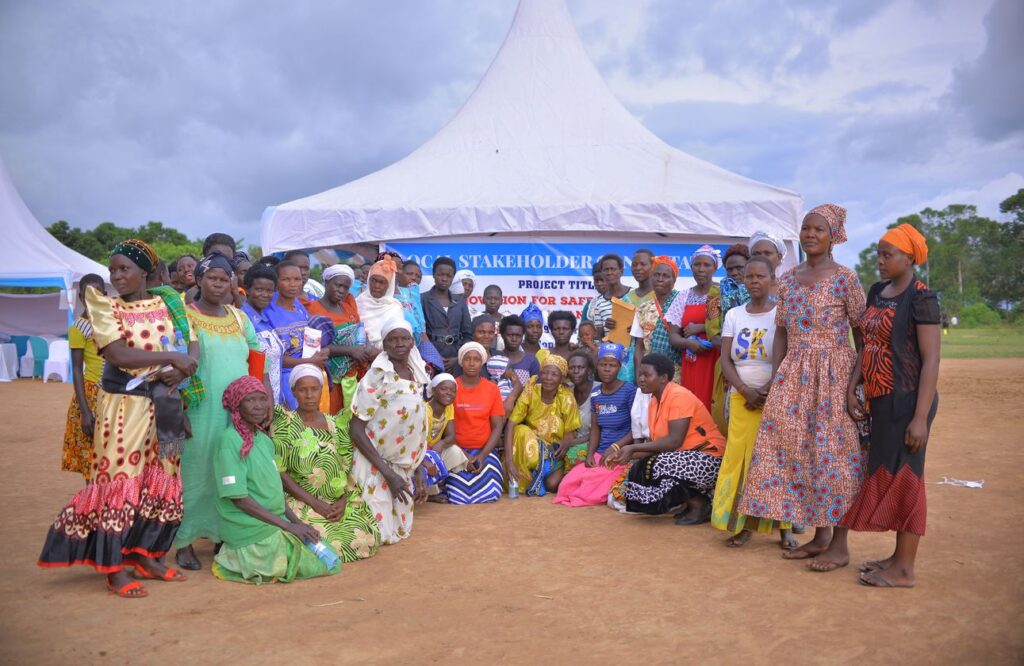
As in other rural regions in Uganda, access to safe drinking water is a huge issue in Eastern Uganda. Waterborne diseases are a continuous problem for the people. The project is working in Buhemba Sub-County, Namayingo District, where currently approximately 40% of people don’t have access to safe water. Most of them depend on Lake Victoria for their daily supply of drinking water. The average income in this region is less than 1 USD per day, hence buying clean water or water disinfection technologies are rarely an option for the people in Buhemba.
The project comes at a very crucial moment where so many cases of waterborne diseases like diarrhoea, dysentery, typhoid and worms are so common among our people including children.
Auma Patricia, Women Association Leader of Babiri-Bandu Women Development Association in Bukewa East Village
To manage the microbiological contamination of water, families fall back on the available resources and practices: boiling the water with firewood on inefficient three stone fires. For this, people have to cut down trees for timber/charcoal or collect branches in nearby forests or on their own land, further contributing to local deforestation and drop in forest coverage. However, due to financial reasons many people do not treat their water at all, hence being even more exposed to serious diseases as cholera, typhoid or worms.
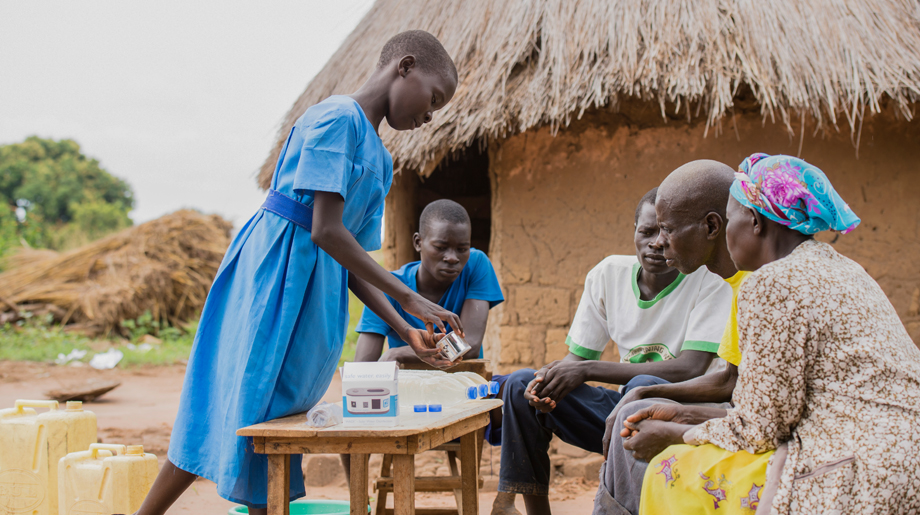
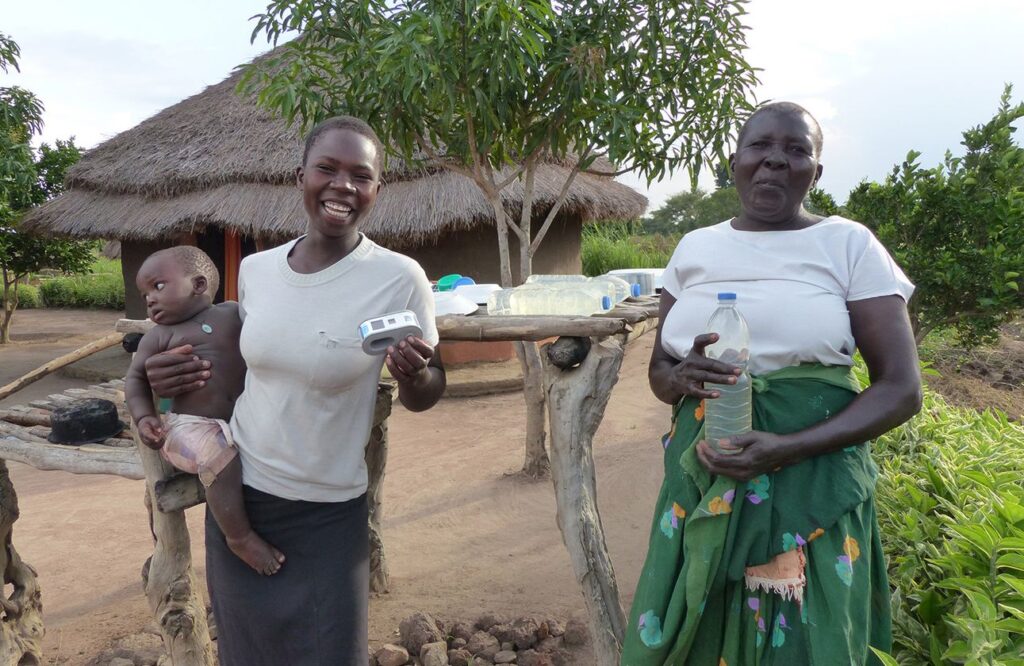
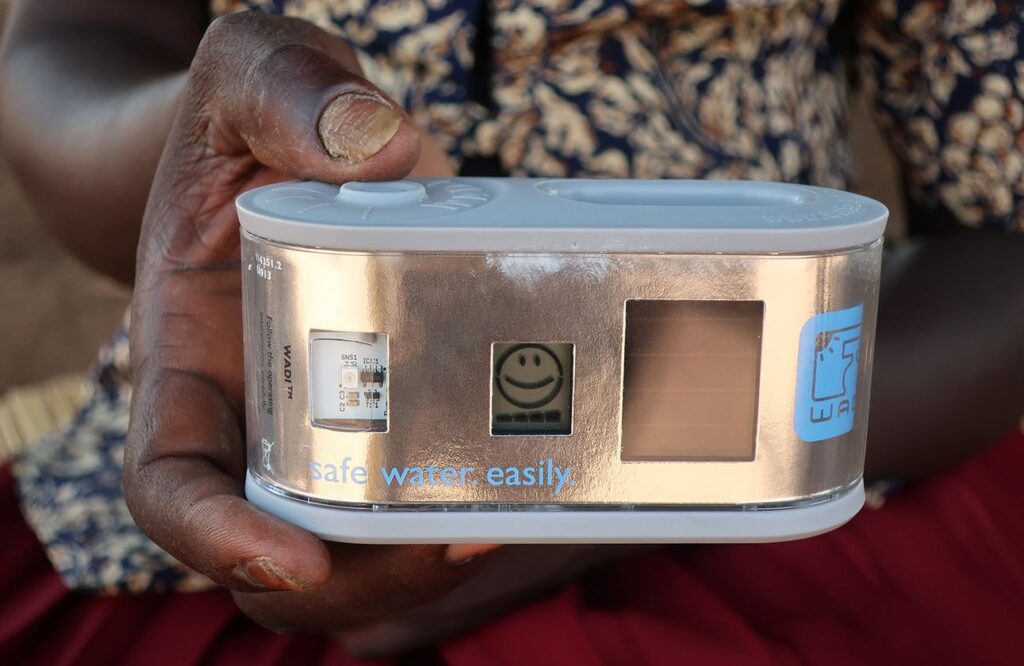
The vision of myclimate’s partner HELIOZ, an Austrian Social Enterprise, is to provide equal access to safe drinking water and to provide knowledge about proper hygiene and sanitation measures as this is a human right and fundamental to the health and well-being of people. HELIOZ developed a device called WADI (Water Disinfection), a solar powered UV measurement device that visualizes the process of solar water disinfection in PET bottles. Solar water disinfection is a natural process, in which the UV-radiation of the sun inactivates certain harmful pathogens in the water. The process only requires PET bottles which are everywhere available in the project region. They are filled with contaminated water and are then exposed to the sun. The duration of this disinfection process is determined by the sun’s UV intensity. A smiley face is shown on the WADI device once the process is completed confirming that the water is safe to drink. The method has been tested by the World Health Organization (WHO) and approved as an effective method for household water treatment.
Safe water has been a problem, the only treatment option available here is when you have some firewood and can boil the water or put chlorine tablets which is expensive and also the water taste is not good!
Lwande Godfrey, Local Council One Chairperson, Ogojje Village, Buhemba Sub County
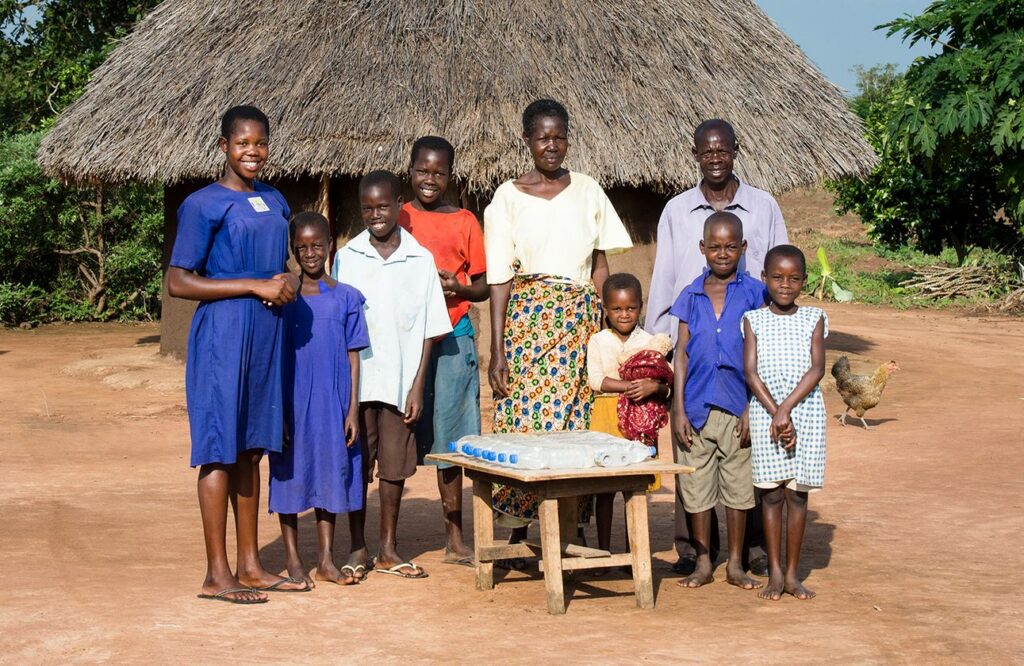
The project provided more than 10,000 households in 45 villages in Buhemba Sub-County with WADI devices and regular trainings on water use and proper hygiene and sanitation practices. By this, the project will reach around 50,000 people. In a previous pilot project in Uganda, families reported that the WADI device is a very easy-to-use solution. As in most households, women are responsible for the collection of firewood and providing their families with water, the project solutions will especially benefit the women by saving time and money. The reduced consumption of firewood will also lift the burden on nearby forests and will save CO₂ emissions as boiling on the open three stone fires is prevented. Through the project, the families will be supplied with the necessary resources to disinfect approx. 20 litres of water per day. In the first monitoring period 2020/21 the project has significantly improved the sanitary situation in the project region. Local artisans were trained and over 30,000 simple sanitation facilities such as hand-washing stations, toilets, bathing shelters were constructed.
Carbon finance will be used to finance the implementation of the project by HELIOZ Austria and their local affiliate Get Water Uganda and to further enhance its impact by working on complimentary activities in water, sanitation and hygiene (WASH) such as providing menstrual hygiene trainings to young girls and supporting households with installing simple handwashing facilities, pit latrines, etc. Carbon finance will also be used to create income opportunities, especially for women in form of fruit tree planting and establishing plastic collection groups to support recycling of plastics.
Justcote Ltd.
Company number: 13881985
Address: Devonshire House, Ettingshall Rd, Wolverhampton WV2 2JT
Telephone: +44 333 050 3479


